Advertisement
In this guide:
- Play Free Letter Games Online
- What Games Are Good to Teach a Child Their ABCs?
- How Preschoolers Learn Best With Games
- How to Play an A to Z Alphabet Game
- Letter Games for 3 and 4 Year Olds
- ABCs for Kindergarteners
- Letter Matching Games
- How to Play a Memory Game With the Alphabet
- From Letter Games to Reading
- Phonics and Sight Words Made Fun
- Good Offline Letter Games for Kindergarteners
- Tips for Parents and Teachers
- More Free Learning Games
- FAQ
Play Free Letter Games Online
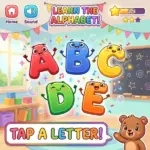
Letter games turn the alphabet into play. Instead of repeating "A, B, C" from an alphabet chart, kids tap, match and find letters, and every right answer feels like a small win. This free A to Z alphabet game runs right in your browser on a PC, laptop, iPad or tablet, so there is no alphabet app to install and no account to create.
It is made for preschool and kindergarten kids who want to learn alphabet letters for the first time, and for older kids who want to practice letter names and order. It is also a great help for learning the alphabet at home. Like all our alphabet games for kids, it is a free learning game you can open any time.
What Games Are Good to Teach a Child Their ABCs?
A good ABC game for kids is short, simple and repeats the same letters in different ways. The best ABC games for kids mix several of these skills. Good letter learning games usually do one of these things:
- Letter identification games: find or tap the letter you are asked for.
- Letter matching: pair an uppercase letter with its lowercase partner (A with a).
- Alphabet order: put the letters from A to Z in the right order, like an ABCDEFGHIJKLMNOPQRSTUVWXYZ game.
- Letter sounds: link a letter to its sound and to a word that starts with it.
- Memory games: flip cards and remember where each letter is hidden.
- ABC puzzle games: drag letter pieces into the right spot.
- ABC flash cards online: see a letter, say its name, then flip to check.
- ABC writing and ABC spelling: trace letters, then build first simple words.
Mixing these types keeps learning fresh. A child who gets bored of one game often happily plays another that practices the same letters. That is also why we have both ABC and 123 games: letters one day, numbers the next.
How Preschoolers Learn Best With Games
Young children learn best when they are active, not just listening. That is what makes ABC learning for kids through play work so well. Games give them three things a worksheet can't:
- Instant feedback: a sound or animation tells them right away if they got it right.
- Repetition without boredom: kids will happily play the same round many times, and each round is more practice.
- Small steps: one letter at a time, so they don't feel lost.
Short bursts of play, hands-on action (tapping and dragging) and lots of praise are the ABCs of learning at this age. Five to ten minutes of letter games a day do more than one long session a week.
How to Play an A to Z Alphabet Game
Most A to Z online games follow the same simple pattern:
- Press Play to start.
- Look or listen for the letter the game asks for.
- Tap it on a tablet, or click it with the mouse on a computer.
- Get it right and move to the next letter, working toward Z.
- Made a mistake? No problem: just try again.
For the youngest players, sit next to them for the first few rounds and say each letter out loud together. Once they know how it works, let them lead. Kids can also use A to Z alphabet games to practice one letter at a time, for example a letter A game first, then B, and so on.
Letter Games for 3 and 4 Year Olds
At 3, most kids are just starting to notice letters, often the first letter of their own name. At 4, many can name several letters and start to link them to sounds. Good letter games for preschoolers and preschool ABC games have:
- Big, clear children's alphabet letters and simple screens
- Few choices at once (two to four options, not ten)
- Friendly sounds and no timers or pressure
- Uppercase letters first, then lowercase
Preschool games with letters should feel like play, not a test. The best preschool games letters can offer are calm, colorful and repeatable. Kids learn letters fastest when they start with a few preschool letters (the ones in your child's name), then add more. If your child gets frustrated, switch to a coloring or matching game and come back later.
ABCs for Kindergarteners
By kindergarten, kids are expected to know all 26 letters, in uppercase and lowercase, and the main sound each letter makes. Alphabet games for kindergarten can go a step further:
- Saying the full alphabet in order from A to Z
- Matching uppercase and lowercase letters quickly
- Finding the first letter of simple words: "What starts with B? Ball!"
- Telling apart letters that look alike, like b and d or p and q
Letter games for kindergarteners work well as a warm-up before reading time, or as a reward after homework. Free online alphabet games for kindergarten are also a great way to practice at home what kids learn at school.
Why are literacy games important in kindergarten?
Kindergarten is when letter knowledge turns into early reading. Literacy games give kids many short, happy practice rounds, which build the letter names and sounds they need before they can read words on their own.
Letter Matching Games
What is the purpose of letter matching? It teaches kids that one letter has two forms: a big one (A) and a small one (a). Books use mostly lowercase letters, so a child who only knows capital letters will struggle to read a real page.
An ABC matching game, or alphabet letter match, also trains the thinking strategy of comparing: kids look at two letters and notice what is the same and what is different in shape, direction and size. That is exactly what they need to tell b from d. Match letters games are one of the most useful steps between knowing the ABC song and reading words. Prefer paper? A to Z alphabet matching worksheets, with or without pictures, practice the same skill offline.
How to Play a Memory Game With the Alphabet
An alphabet memory game is a fun twist on matching:
- All cards start face down.
- Flip two cards.
- If they show a matching pair (A and A, or A and a), they stay open.
- If not, they flip back, so try to remember where each letter was.
- Find every pair to win.
Start with 6–8 cards for little kids and add more as they improve. Saying each letter out loud when it is flipped turns the game into extra letter practice. You can try this kind of play in our Memory Match Puzzle.
From Letter Games to Reading
Letter games are the first step on the road to reading, and A to Z reading games build on them. The path usually looks like this:
- Letter names: learning the letters of the alphabet and what each one is called.
- Letter sounds: knowing that B says /b/.
- Blending: putting sounds together: /c/ /a/ /t/ makes cat.
- Simple words: reading short words and sight words.
That is why it pays to make alphabet learning strong first. Every round of letter games now makes reading easier later. Older kids who already read can move on to word games like 5 letter word games, where they build and guess words.
Phonics and Sight Words Made Fun
How do you teach phonics in a fun way?
Keep it playful and short. Say a sound and let your child hunt for the letter, sing letter sounds to a favorite tune, or play "I spy" with sounds: "I spy something that starts with /m/." To teach your child to sound out letters, stretch a word slowly ("sss-uuu-nnn") and let them guess it. Online, a letter sounds game works the same way and helps teach letter sounds virtually.
How do you teach sight words in a fun way?
Sight words are common words kids learn to read at a glance, like "the" and "and". Make them a game: write them on cards for a memory game, hide them for a word hunt, or let your child "pop" the word you call out. Five minutes a day at home is enough practice for most kindergarten kids.
Good Offline Letter Games for Kindergarteners
Screens are only one way to learn. These easy offline games use the same ideas and need almost nothing:
- Letter hunt: hide paper letters around the room and call one out to find.
- The letter game ("I spy"): "I spy something that starts with M."
- Last letter game: say a word, and the next player says a word that starts with its last letter (cat, tree, egg…).
- Alphabet hopscotch: write letters in chalk and say each one you land on.
- Letter in the sand: trace letters in a tray of salt, sand or rice.
- Name puzzle: cut your child's name into letters and rebuild it.
Teachers can use "the alphabet game" as a game with the alphabet in a group of students: go around the circle and each child names something that starts with the next letter. Mixing offline play with online games with letters gives kids practice with their eyes, hands and whole body.
Tips for Parents and Teachers
- Keep sessions short: 5–15 minutes is perfect for young kids.
- Play together at first and say the letters out loud. These are learning games you can play with kids, not just hand over.
- Praise effort, not just right answers.
- Start with the letters in your child's name: they care about those most.
- Repeat often. Learning letters takes many short meetings with them, not one long lesson.
- In class, letter games are great for small groups, centers or a quick brain break.
- Looking for educational games for kids of 5 or 6? Choose ones with clear goals, no pop-up pressure, and a skill you can name (letters, numbers, shapes).
- No need to buy anything: plenty of free kids educational games online cover the same skills as paid kindergarten games.
More Free Learning Games
Looking for more fun? Try these free games on Alphabet Games:
- Alphabet Game – learn and practice the letters from A to Z.
- Memory Match Puzzle – flip the cards and find every matching pair.
- Barney's Music Band – make music and play with sounds.
- Missing Shapes – find the missing piece and match the right shape.
- Math Puzzles for Kids – solve simple number puzzles.
- Tap to Color Painting Book – tap to fill pictures with bright colors.
- Animal Transform Race – race and switch into different animals.
Browse more alphabet games online in our Alphabet Games and Word & Spelling Games categories.
FAQ
Are these letter games free?
Yes. This A to Z alphabet game online is free to play, with no download and no sign-up.
Does it work on iPad, tablet and PC?
Yes. It plays in the browser on PCs, laptops, iPads and other tablets. Use the mouse on a computer or tap with a finger on a tablet.
What is a baby ABC game, and what age is right?
Letter games like this are best for kids aged about 2 to 7. "Baby ABC games" are very simple versions with big letters, songs and one tap per screen. Health experts advise avoiding screen media for children under about 18–24 months (except video chats), so for a baby of six or seven months, the best learning games are singing the ABC song, looking at letter books together and naming things you see.
How can I make learning games for toddlers?
Write letters on sticky notes and stick them on a wall or door. Call out a letter and let your toddler find it and pull it off. You can also put foam letters in a bowl of water to "fish" out, or match paper letters to the same letters on a sheet. Healthy, educational games for toddlers are short, hands-on and played together.
How can children with special needs play ABC games?
Many children with special needs enjoy alphabet games because they are visual, repeatable and give instant feedback. Play at the child's pace, keep sessions short, sit with them, and repeat favorite letters as often as they like. A teacher or therapist can suggest which letters or skills to focus on.
Why are games good to play with ELL kindergarteners?
For English language learners, games show letters with pictures and sounds, so kids can learn without needing many English words first. The relaxed, playful setting also makes kids more willing to try speaking new sounds out loud.
Are there games where kids put letter sounds together?
Yes, these are called blending or phonics games. They come after kids know their letters and sounds. Strong alphabet skills from letter games make blending much easier.
Is there a free game that teaches a preschooler how to read?
No single game teaches reading on its own, but free online alphabet games build the first skills reading needs: letter names, letter sounds and matching. Pair them with reading books together every day for the best results.
How many letters are in the alphabet?
The English alphabet has 26 letters: 5 vowels (A, E, I, O, U) and 21 consonants. Each letter has an uppercase and a lowercase form, so kids actually learn 52 shapes.